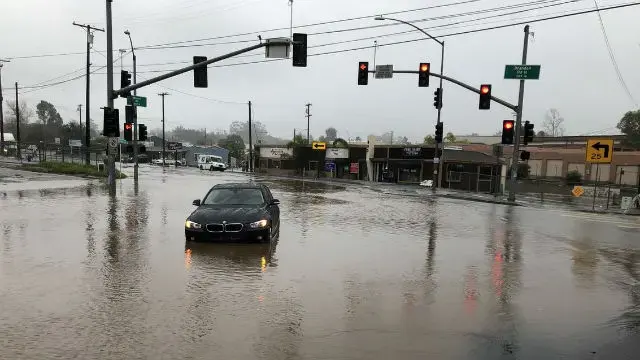
Clean water from a broken supply pipe and brown water from an overflowing creek are very different problems. After Chollas Creek and the stormwater system backed up in January 2024, homes in southeast San Diego did not just have standing water. They had mud, debris and floodwater carrying whatever the street and the channel had collected.
Key takeaways
- Creek overflow leaves silt and contaminated water, so the cleanup starts with removal rather than simple drying.
- On January 22, 2024, about 3 inches of rain fell in six hours, and water inside some homes reached shoulder height.
- The worst flooding in the county hit Southcrest, Encanto, Mountain View and Lincoln Park, with Rolando and Shelltown also flooded.
- Much of Chollas Creek was channelized with concrete in the 1970s, which risks overflow when debris builds up.
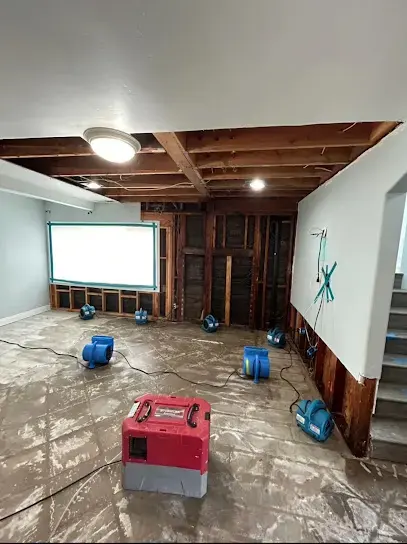
- Wet drywall, insulation and flooring that touched floodwater are removed, and the remaining framing is dried with monitored equipment.
What happened on January 22, 2024
About 3 inches of rain fell in six hours on January 22, 2024. That was unprecedented for January in a region that averages about 2 inches a month in winter.
The worst flooding in the county hit Southcrest, Encanto, Mountain View and Lincoln Park, and Rolando and Shelltown also flooded. More than 1,200 people were displaced, and thousands of homes were damaged.
- Water inside some homes reached shoulder height.
- The city's Stormwater Department said the flooding came from heavy rainfall combined with an aging stormwater system.
- The event is now a reference point for how fast water can enter southeast neighborhoods.
Why Chollas Creek matters to southeast homes
The Chollas Creek Watershed is the largest in San Diego County, covering over 16,000 acres of urban land. Water from a large area of streets, roofs and parking lots drains toward the same channels.
Much of the creek was channelized with concrete in the 1970s. A concrete channel moves water efficiently until debris builds up, and then the risk of overflow rises.
The neighborhoods around it include Southcrest, Mountain View, Lincoln Park, Encanto and Chollas View. Southeast San Diego has no official boundary, but it is roughly south of State Route 94 and east of downtown, and Interstate 805 divides some of its communities from one another.
The Tijuana River Valley, south of Nestor and San Ysidro, also floods in big storms. In January 2024 a swift water rescue team was needed off Dairy Mart Road there, so flooding at the south end of the city is its own pattern, apart from the creek.
Why creek floodwater is treated as contaminated
Floodwater from a creek or street collects soil, oil, trash and bacteria on the way. Once it enters a home, it is handled as contaminated water, not as clean standing water.
That changes the plan. A clean water leak can often be dried in place, but floodwater leaves silt on floors and inside wall cavities, and porous materials that were soaked cannot be sanitized by running a fan.
Silt is also why a fan alone does not work. Fine mud dries into a crust on flooring and settles inside wall cavities, and it holds moisture against the wood underneath.
For that reason surfaces are cleaned before drying equipment is set, and wall bottoms are opened when the water and silt came in at floor level. Bulk water goes first, using water extraction equipment, and the rest follows in order.
- Mud and silt are shoveled and vacuumed out before surfaces can be cleaned.
- Carpet, pad and wet insulation are removed and discarded.
- Drywall that wicked water upward is cut above the high water mark.
- Furniture and stored items on the floor are sorted for cleaning or disposal.
How the cleanup is sequenced
The extraction crew works from the top of the problem down, removing bulk water and mud before any drying equipment is set.
A typical sequence for a flooded ground floor follows the steps below.
Extraction and debris removal
Truck mounted and portable extractors pull standing water. Silt, debris and ruined materials are carried out so the structure can be seen and measured.
Flood cuts, cleaning and treatment
Drywall and insulation are cut back above the high water mark, and exposed studs and floors are cleaned and treated with an antimicrobial product. Cabinets, baseboards and flooring are checked for hidden moisture.
Structural drying
Air movers and dehumidifiers run until readings show the framing and subfloor are dry. The drying team logs readings so the progress is documented for an insurance claim.
Contents and keepsakes
Furniture, boxes and clothing on the floor are sorted into items that can be cleaned and items that cannot. Photographs and papers are bagged and set aside early, since mud that dries on them is hard to remove.
- Lift papers, photos and electronics out of the mud first.
- Do not run a flooded appliance or television until it is checked.
- List each discarded item for the claim before it leaves the home.
What residents document before cleanup starts
After a flood, the order of events matters for a claim. Photos of the high water mark, the mud and the damaged belongings should be taken before anything is moved.
Coverage depends on the policy and on how the water entered the home, so the paperwork is worth a separate conversation with the insurer.
- Photograph the high water mark on walls and furniture from several angles.
- List ruined items with approximate age and value.
- Keep damaged materials for the adjuster to see when asked, if storage is possible.
- Ask the restoration crew for moisture logs and a written scope of removal.
Creek work and what it changes
On June 26, 2026, the city began phase one of a Chollas Creek restoration along Federal Boulevard. It covers 1,350 linear feet and includes planting 300 trees, and phase one is expected to finish in March 2027.
Phase two still needs funding. Until work reaches the whole channel, residents in the low parts of southeast San Diego have reason to prepare before each winter storm.
Getting ready before the next storm
San Diego averages about 10.65 inches of rain a year on the coast, mostly from December through March, and May through September is almost dry. That long dry season can make people forget how quickly a winter storm can change the picture.
Neighbors who have been through a flood often say the hardest part was the pace of decisions. Having the shutoff locations, a photo record and a restoration contact ready before the rain makes those decisions easier.
- Clear gutters and yard drains before the first winter storm.
- Know where the main water shutoff and the electrical panel are.
- Keep photos of the home's contents on a phone or a cloud account.
- Store valuables and important papers above floor level.
- Read about storm and flood cleanup in San Diego before a loss, not after.
Questions
Is floodwater from Chollas Creek considered contaminated?
Yes. Creek and street floodwater carries soil, debris and bacteria, so it is treated as contaminated water. Porous materials that soaked in it are generally removed rather than dried in place.
Which neighborhoods flooded worst in January 2024?
The worst flooding in the county hit Southcrest, Encanto, Mountain View and Lincoln Park, and Rolando and Shelltown also flooded, according to the city's flood records.
How soon should drying start after a flood?
As soon as bulk water and mud are removed. Delays let water move into wall cavities and subfloors, and that makes drying longer and removal more extensive.
What does the restoration crew do with the mud?
Mud and silt are shoveled and vacuumed out, then the surfaces underneath are cleaned and treated. Drying equipment is placed only after the bulk debris is gone.
Is flood cleanup the same as water extraction?
Extraction is the first part of it. Flood cleanup adds debris removal, flood cuts and antimicrobial treatment, followed by structural drying and documented readings. Details on the first step are on the water extraction page.