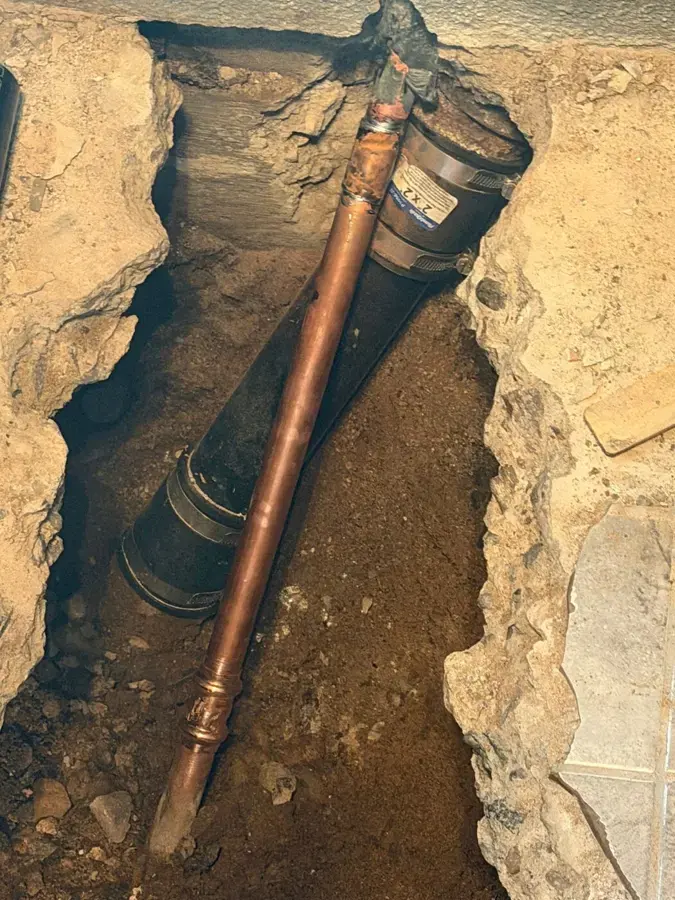
A slab leak is a pressure leak in a pipe under a concrete floor. Nobody sees it, and it usually does not announce itself with a flood. It shows up as a warm spot, a faint sound or a water bill that makes no sense, and by the time the floor gives a sign, the water has often been moving for a while.
Key takeaways
- Many National City homes are 1950s to 1970s tract homes built on slabs, and copper pipe under a slab can pinhole and leak.
- Signs include a water meter that moves with everything off, warm patches on the floor, the sound of running water and flooring that lifts or feels damp.
- A simple meter test can show whether water is moving when no fixture is in use.
- A plumber locates and repairs the leak; the restoration team dries the flooring, the slab surface and the wall bottoms.
- Sweetwater Authority provides water service in National City, and a utility bill that jumps for no clear reason is worth a look.
What a slab leak is
In a slab on grade home, supply pipes can run beneath or inside the concrete floor. When one of those pipes leaks, the water has no easy way out, so it rises into flooring, soaks into wall bottoms or travels along the slab.
The leak is under pressure, which means it keeps running whenever the system is charged. That is different from a drain leak, which only releases water when a fixture is used.
Not every slab home has supply pipes in the slab, and some have them in the attic or walls. A plumber can say how a particular house is plumbed, so the signs below are a reason to ask, not a diagnosis.
Why National City homes come up in this conversation
National City was incorporated in 1887 and is the second oldest city in San Diego County. Its housing mixes Victorian and Craftsman homes, prewar bungalows on raised floors, 1950s to 1970s slab on grade tract homes and many apartment buildings.
Local restoration crews expect copper pipe under a slab that pinholes and leaks in the tract homes. Slab leaks are one of the plumbing failures that matter in a city with that building stock, alongside galvanized supply pipe in pre 1960 homes.
The service area includes Olivewood, Kimball Park, El Toyon, Las Palmas and Lincoln Acres, and the same warning signs apply anywhere a slab home stands.
Signs a slab may be leaking
No single sign proves a slab leak, but several together are a good reason to call a plumber for leak detection.
A leak on a hot water pipe makes the warm spot easier to notice, since the concrete above it heats up. A leak on the cold side is quieter, and the first clue may be a damp corner or a meter that will not hold still.
- The water meter dial moves even though every faucet and appliance is off.
- A warm or hot patch on a floor, especially in a hallway or kitchen.
- The sound of running or hissing water in a quiet room.
- Damp carpet, lifting laminate or tile grout that looks wet.
- A water bill that rises with no change in household use.
- A musty odor near a baseboard that does not go away with cleaning.
A simple meter test
A plumber can confirm a leak, but a homeowner can do a first check without tools.
- Turn off every fixture and appliance that uses water, including the ice maker and the irrigation timer.
- Find the water meter and look at the small leak indicator or the sweep dial.
- Note the position, wait a while without using water, then look again.
- Movement means water is flowing somewhere, and the next step is a leak detection visit.
What happens to the floor and the walls
A slab leak damages in a different order from a roof leak. The water starts below the flooring and works upward.
Carpet and pad hold water against the slab, laminate swells at the seams and hardwood cups. Wall bottoms and cabinet toe kicks pick up moisture from the floor level and can stay damp long after the surface looks fine.
Tile floors can hide the problem longest. Grout and tile resist water, so the damage may be sitting under the tile and in the bottom of the walls before a crack or a loose tile finally shows.
What the plumber does
The plumber locates the leak with detection equipment, then repairs or reroutes the pipe. In some cases the slab is opened at the spot, and in others the pipe is rerouted overhead.
What the restoration crew does
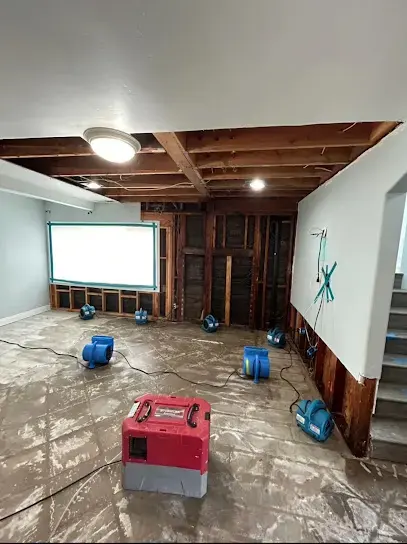
The drying team lifts the affected flooring, removes wet pad and baseboards and sets air movers and an LGR dehumidifier. Moisture readings on the slab, the wall bottoms and the cabinet bases show when each area is dry.
How the drying is handled
Concrete holds water longer than wood or drywall, so a slab can need extended monitoring even after the surface is dry. Long running leaks can need desiccant drying and wide flooring removal.
A written record of the readings helps with an insurance claim, and coverage depends on the policy.
The slab itself is rarely replaced; it is dried. The flooring over it is the larger issue, because wet laminate and carpet pad cannot be saved, and tile may be lifted so air can reach the concrete.
Wall bottoms matter as much as the floor. Water that rises from a slab can climb into drywall and wood plates, so the drying team checks the lower foot or so of every wall that borders the wet area, and cabinet bases are opened if readings stay high.
- Flooring lifted in the wet room and checked in the next rooms
- Baseboards and cabinet toe kicks opened where readings are high
- Daily readings until the slab and walls match the dry reference
Next steps for a homeowner
If the signs fit, shut off the water to the house when the leak is confirmed and call a plumber for leak detection. Photograph the floor and the meter, and keep the water bill.
For process details, see slab leak water damage in National City, the structural drying page and the page on burst and pinhole pipe leaks.
A few habits make the plumber's visit more useful and protect the claim.
- Do not keep running water to test the leak.
- Do not drill or cut into the slab before the leak is located.
- Do not cover a warm or damp spot with a rug and forget it.
- Keep the date the meter test was done and what the reading was.
Questions
How can a homeowner tell if a floor has a slab leak?
Common signs are a water meter that moves with everything off, a warm spot on the floor, the sound of running water and flooring that lifts or feels damp. A plumber confirms it with leak detection.
Why do copper pipes leak under a slab?
Copper pipe under a slab can develop pinholes over time. That is one of the plumbing failure modes crews see in National City homes built from the 1950s to the 1970s.
Who fixes a slab leak?
A plumber locates and repairs or reroutes the pipe. The restoration team removes wet flooring and dries the structure afterward.
Is a high water bill always a slab leak?
No. A running toilet, a faulty irrigation timer or a change in household use can raise a bill. A bill that jumps with no change, together with other signs, points to a hidden leak.
Which utility serves National City?
Sweetwater Authority provides water service in National City, Bonita and the western and central parts of Chula Vista.