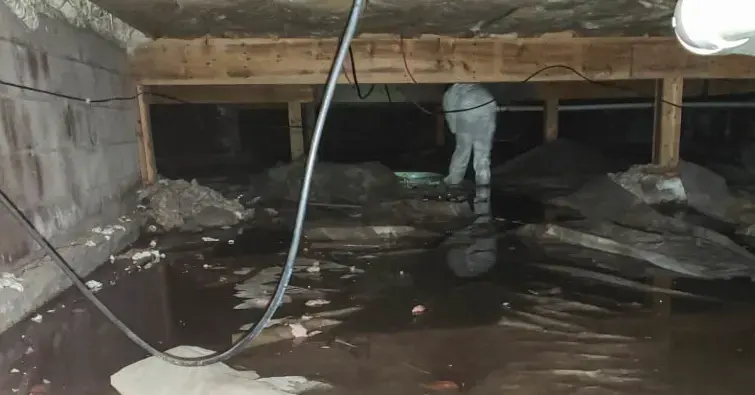
A bungalow on a raised floor has a hidden room underneath it: the crawl space. When water collects there, nobody sees it from the living room. The first clues are usually a floor that feels cold, a musty smell or insulation hanging from the joists, and by then the wood has been damp for a while.
Key takeaways
- National City has prewar bungalows on raised floors with crawl spaces, along with Victorian and Craftsman homes near A Avenue and Heritage Square.
- Water under a floor can come from a failed supply pipe, a drain leak or storm runoff.
- Wet insulation is removed, standing water is pumped out and the joists and subfloor are dried with dehumidification.
- Sewage or storm runoff in a crawl space is Category 3 water and needs more removal and an antimicrobial step.
- Crawl spaces are confined and can hold electrical hazards, so entry with standing water is left to the restoration team.
Why bungalows have a crawl space
National City was incorporated in 1887 and is the second oldest city in San Diego County. Its older housing includes Victorian and Craftsman homes near A Avenue and Heritage Square and prewar bungalows on raised floors with crawl spaces.
A raised floor leaves a gap between the ground and the floor framing. That gap carries pipes, wiring and insulation, and when water enters it, the wood is the first thing that gets wet.
Raised floors keep framing off the ground, but they also hide the space where leaks and runoff collect.
Homeowners often find out about the space only when something goes wrong. A good habit is to know where the access panel is, to keep it clear and to look at it with a flashlight after the first big storm of the season.
How water gets under a floor
Water in a crawl space has the same short list of sources in any city, and each one calls for a different response.
In a home with a raised floor, a failed washer or tub drain can empty straight into the crawl space, and the water may not show anywhere inside until the floor is soft.
Water from a clean supply can often be dried in place, while sewage and runoff need removal. The source decides the plan, which is why the first step is to identify where the water came from.
- A supply pipe that leaks under the floor and drains into the dirt.
- A drain or sewer pipe that fails or backs up under the house.
- A water heater, washer or tub drain that leaks through the floor.
- Winter storm runoff that finds its way through vents or low openings.
- A leaking hose bib or irrigation connection near the foundation.
The National City rain pattern
National City is semi arid, with about 10 inches of rain a year, most of it from November to March in a few winter storms or atmospheric rivers. A dry crawl space for most of the year can take on water in a single storm.
The Sweetwater River runs in a flood control channel along State Route 54 on the southern edge, Paradise Creek runs through the Westside and San Diego Bay lies along the western edge. The January 22, 2024 storm was one of the wettest days on record at San Diego's airport and flooded homes in nearby Southcrest and Shelltown.
Because the rain comes in a few storms rather than steady showers, a crawl space can go from dry to wet in one event. A homeowner who has never seen water under the floor can still have a problem after the first big storm of the season.
Signs of water under the floor
A homeowner may never go under the house, so the clues have to come from inside.
A flashlight view through an access panel, with no one stepping inside, is the safest way to confirm what is going on. Dark, wet soil, pooled water or insulation lying on the ground are all reasons to call for help.
- Floors that feel cold, soft, springy or uneven in spots.
- Wood flooring that cups, buckles or has gaps.
- A damp, musty or earthy odor that is strongest near floor vents or access panels.
- A water meter that moves when every fixture is off.
- Insulation that sags or hangs from the joists when viewed through an access panel.
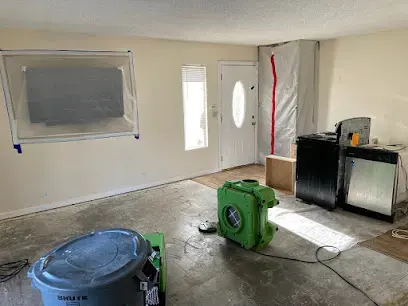
What the crew does under the house
Water removal starts with the safety check. Crawl spaces can hold wiring and tight spaces, so the crew looks at the electrical conditions before any pump is placed.
After that, the work follows a set order.
After the wood is dry, a plumber or contractor deals with the cause, and insulation is replaced only when the readings are normal.
Pump out and remove insulation
Standing water is pumped out, and insulation that has soaked up water is removed because it holds moisture against the framing. Debris and any contaminated material are taken out.
Dry the joists and subfloor
The crew sets dehumidifiers and air movers, and the vents are sealed for drying so humid outside air is not drawn in. Readings on joists and subfloor show when the wood is dry.
- Pump out of standing water
- Removal of wet insulation
- Joist and subfloor drying with dehumidification
- Vents sealed for drying
- Readings taken until the framing is back to normal
When the water is not clean
A leaking supply pipe releases clean water. Sewage from a failed drain and runoff from a storm are different, and both are Category 3.
Contaminated water in a crawl space calls for more removal, an antimicrobial treatment and sometimes an air barrier so odors do not travel upward. Cast iron drains and clay sewer laterals with root intrusion are among the failures behind sewage backups in older National City homes.
Because contaminated material is removed and bagged, the work is planned so that dust and odors do not travel upward into the living space. The drying team also checks the floor above for moisture, since wood flooring can show damage after the crawl space looks dry.
Steps a homeowner can take at the start
The goal is to stop new water and protect what is already wet.
The page on crawl space water removal in National City describes the process in detail, and the water extraction page covers the pumping step. After the water is gone, structural drying shows how framing readings are tracked.
- Turn off the main water supply if a supply pipe may be the source.
- Stop using drains if a backup is possible.
- Keep children and pets away from access panels.
- Photograph visible damage inside the house.
- Do not enter a crawl space with standing water, since wiring and tight spaces add risk.
Questions
What kind of homes in National City have a crawl space?
Prewar bungalows on raised floors have crawl spaces. Victorian and Craftsman homes near A Avenue and Heritage Square also belong to the older housing stock.
Is wet crawl space insulation removed?
Yes. Insulation that has soaked up water holds moisture against the framing, so it is removed and replaced after the wood is dry.
How is a crawl space dried?
Standing water is pumped out, wet insulation is removed, and dehumidifiers and air movers run with the vents sealed. Moisture readings on joists and subfloor show when the wood is dry.
Is storm runoff in a crawl space clean?
No. Runoff and sewage are treated as Category 3 water, which needs more removal and an antimicrobial treatment.
Can a homeowner go under the house to check?
A look through the access panel with a flashlight is fine when there is no standing water. Entry into a wet crawl space is left to trained crews because of wiring and confined space risks.