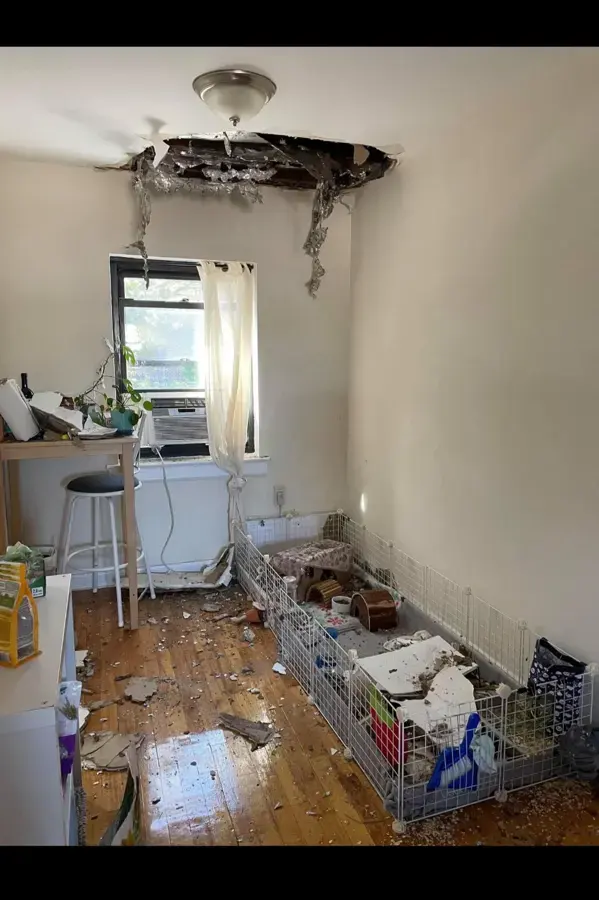
A stain on the ceiling of an apartment is a message from somewhere else. In National City, where most households rent and many live in apartment buildings, water that appears overhead usually started in a bathroom, a supply hose or an appliance in the unit above, and the resident below has the wet ceiling without the control.
Key takeaways
- National City has many apartment buildings, and most households rent, so ceiling leaks from a neighboring unit are a regular pattern.
- Move belongings, photograph the damage and notify the property manager in writing as early as possible.
- A bulging ceiling holds water and can collapse, so it is kept clear of people and furniture.
- Drywall is opened where it is wet, the joist bays are dried and the unit above is checked as the source.
- When two units are affected, drying and records are kept separate for each.
Where the water usually comes from
A ceiling leak is rarely a ceiling problem. The water arrives from above and finds its way down through the floor structure.
Because many buildings in National City are apartment buildings and most households rent, the person who sees the damage is often not the person who can fix the source. That is why the first message to the property manager matters as much as the first towel.
- A bathtub or shower overflow, or a failed seal around a drain.
- A toilet supply hose or a wax ring that has started to weep.
- A washing machine, dishwasher or ice maker hose in the unit above.
- A supply pipe inside a wall or floor.
- A roof or window leak running down through an upper unit.
What the resident below should do first
The first goal is to limit damage and to protect people. Water in a ceiling can reach light fixtures and outlets.
Brown water, a musty smell or a drip that continues after the neighbor shuts the fixture off can point to a leak inside a wall or floor rather than a simple overflow.
- Stay out from under a bulging ceiling, and place a bucket under any dripping point.
- Turn off the circuit for ceiling lights and outlets nearby if the panel can be reached safely.
- Move furniture, electronics and bedding away from the wet area.
- Take clear photos and short videos of the stain, the drip and any damaged items.
- Tell the property manager in writing, with a date and a description, and keep a copy.
- Ask the neighbor above, politely, to check for a running fixture or a failing hose.
Why the ceiling can look worse than it is, or better
A stain shows where water reached the surface, not how far it traveled. Water can run along a joist for some distance before it drips, and insulation above the ceiling can hold moisture long after the drip stops.
On the other hand, a small brown spot on a ceiling does not always mean a large leak. A moisture meter and a thermal check show the real size of the wet area.
Light fixtures and smoke detectors in a wet ceiling are worth a look as well. Water can collect in a fixture box and drip when the light is switched on, so a fixture that is wet is left off until it has been checked.
How the ceiling is dried
The drying team starts with the source, then works downward. A leak from a unit above is handled in two parts that are kept distinct.
The aim is to leave the unit livable. Drying equipment is placed so it does not block exits, and the drying team shares the plan for how long equipment will run, since readings, not appearance, decide the schedule.
In the unit with the leak
The source is found and stopped, then wet flooring, baseboards and cabinet bases are checked and dried. The aim is to stop water from continuing into the floor structure.
In the unit below
A small hole may be made in a bulging section to drain it safely, then wet drywall sections are cut out and wet insulation is removed. Vent holes and cut sections let air reach the joist bays, and air movers and an LGR dehumidifier dry the cavity.
- Drywall sections opened where readings show moisture
- Wet insulation removed and discarded
- Joist bays dried with air movers and an LGR dehumidifier
- Moisture readings taken until the ceiling and walls reach normal levels
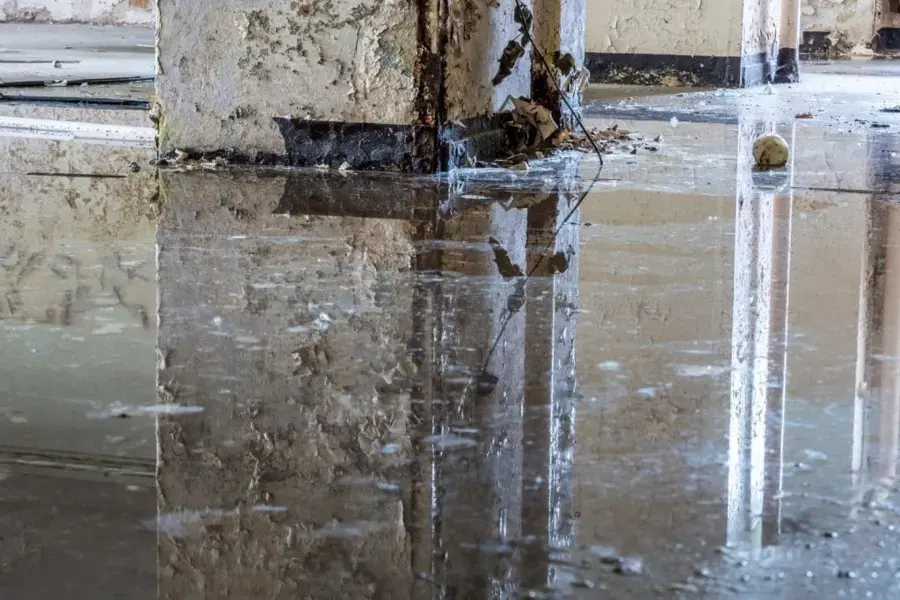
Documents that matter for renters and owners
When water crosses from one unit to another, records protect everyone involved. Coverage depends on the policy, and who pays for what depends on how the leak started.
Renters insurance, the building's insurance and the neighbor's policy can each play a part, so the dates and photos should be kept in one folder.
Photos of belongings moved to a dry room belong in the same folder, since they support the inventory for a claim.
- Photos taken before anything is moved, with a date.
- The written notice to the property manager.
- A scope from the restoration crew listing what was opened, removed and dried.
- Moisture readings, which show when each area dried.
When two units are affected
A leak that damages both the source unit and the unit below needs separate documentation. The drying team keeps the work, the readings and the invoices for each unit apart so each insurer or owner sees only its own part.
If the leak came from an appliance, the page on appliance and supply hose leaks explains how the floor and cabinets are handled in the source unit.
For renters, a short written record of dates helps everyone: the date the stain appeared, the date the property manager was told, the date the source was repaired and the date the ceiling was dried and closed.
How to reduce the chance of a repeat
A leak from above can be prevented by checking small things in the source unit. Washing machine and dishwasher hoses age, and a bathroom seal that fails slowly can leak for a long time.
More detail on the process is on the ceiling leak water damage page and the water extraction page.
A leak that starts in one unit is a building problem, so the same report that protects the resident below also helps the property manager inspect the other units on that stack.
- Replace old washing machine hoses with new reinforced ones.
- Check under sinks and behind toilets for damp spots.
- Report a stain or a drip to the property manager as soon as it appears.
Questions
Who should be told first about a ceiling leak from the unit above?
The property manager, in writing, with a date and photos. Then the neighbor above can be asked to check for a running fixture or a failing hose.
Should a bulging ceiling be popped?
A bulging ceiling holds water and can fail. A small hole made carefully in the lowest point can drain it into a bucket, and the restoration team does this when needed. Keep people and belongings out from under it.
Can wet ceiling drywall be dried in place?
Sometimes, if the water is clean and it is caught early. Drywall that sags, stains or stays soft is usually cut out, and wet insulation is removed.
Why are two units documented separately?
Each unit may have its own insurer or owner, so the work and the readings for the source unit and the unit below are kept apart.
What are the common causes?
Bathtub overflows, toilet supply hoses, washing machine or dishwasher hoses and supply pipes inside walls and floors are the usual sources of water coming through an apartment ceiling.