
Most water damage starts with a pipe. In Imperial Beach, it can start with the ocean. When a winter storm lands on top of a high tide, seawater can move off the beach, through the street and under a front door, and the cleanup that follows has little in common with a leaking washing machine.
Key takeaways
- Imperial Beach is mostly flat and sits at an elevation of about 20 feet, so water has nowhere to drain to quickly.
- Seawater has flowed off the beach and into neighborhoods several times each winter, and storm drains on Seacoast Drive spill seawater onto roads.
- When an extreme high tide coincides with a storm, San Diego Bay floods adjacent neighborhoods in the north end of the city.
- Seawater and storm runoff are handled as contaminated water, so wet carpet and pad are removed, not dried.
- Salt left behind keeps surfaces damp, which is why thorough drying and readings matter.
How water reaches Imperial Beach homes
Imperial Beach borders the Pacific Ocean to the west, the Tijuana River estuary to the south and San Diego Bay to the north. The city covers about 4.4 square miles and is mostly flat, so residents cannot simply move to higher ground.
California American Water is the water provider for Imperial Beach, and a sewer pipe and a water pipe run beneath Seacoast Drive and are at risk from rising water. For households in the area, the Imperial Beach water damage pros handle both flooding and pipe leaks.
- Seawater flows off the beach and into neighborhoods several times each winter.
- Storm drains on Seacoast Drive spill seawater onto roads.
- When an extreme high tide coincides with a storm, San Diego Bay floods adjacent neighborhoods in the north end.
- The December 12, 2015 flood, driven by a hurricane like storm, was the most severe coastal flooding since February 2014, according to the mayor.
- On January 6, 2023, streets flooded from storm surge.
Who sees it first: ground floor units
About 68.3 percent of occupied homes in Imperial Beach are rented, and housing includes beachfront condominiums, vacation rentals, apartments and townhomes. Ground floor units sit closest to the street, where the water arrives first.
At one coastal apartment building, first floor residents have had to sweep ocean water out of their homes. Some neighborhoods place sandbags outside doors before storms that coincide with high tides.
For renters, the usual order is to tell the property manager in writing, keep photos and ask for a written record of what the restoration crew removed. Coverage depends on the policy, so the paperwork is read before any assumptions are made.
Why seawater is not like a pipe leak
Water from a pipe is usually clean when it starts. Water from the street or the ocean is not.
It carries sand, silt, salt and whatever the storm drains and gutters have collected.
Imperial Beach also sits at the end of the Tijuana River watershed and is affected by what happens upriver. Untreated sewage and spills from the Tijuana River have caused repeated beach closures, which is one more reason coastal floodwater is handled as contaminated.
- Sand and silt settle into carpet, tile grout and baseboard gaps.
- Salt leaves residue that holds moisture and can corrode metal fasteners and appliance bases.
- Floodwater of this type is treated as Category 3, so porous materials are removed.
First steps for a resident
The goal is to protect people first, then belongings, then the structure. Water that has entered from outside should not be treated as safe to walk through barefoot.
- Stay out of standing water if the electrical panel or outlets are wet, and turn power off at the main only if it can be reached safely and dry.
- Wear boots and gloves when moving through wet rooms.
- Lift furniture and belongings onto blocks or higher surfaces.
- Take photos of the high water mark, the entry point and damaged items.
- Sweeping out water is fine for a quick reduction, but the remaining water in floor materials needs extraction.
- Contact a storm and flood cleanup team before the water settles into flooring.
How the cleanup is carried out
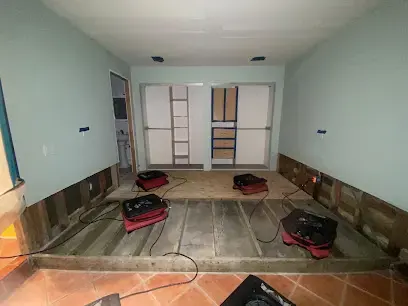
The extraction crew removes standing water and sand first, then checks what the water reached. Carpet, pad and the bottom of drywall that touched seawater are cut out and discarded.
The remaining surfaces are cleaned and treated. Drying equipment is placed after the debris is gone, with air movers moving air across wet surfaces and dehumidifiers pulling moisture from the room.
Drying and readings
Repeated tidal and storm events make documented moisture readings important. The drying team logs readings on walls, subfloors and framing, as in any structural drying job, so there is a record of when each area reached normal levels.
A coastal home also sits in a damp environment already, so drying equipment often runs until readings, not appearance, show the structure is dry.
Items and contents
Contents are sorted into cleanable and non salvageable. Electronics, upholstered furniture and anything stored on the floor are reviewed first.
Cleaning and odor control
After debris is out, floors and wall bottoms are washed and treated. Salt residue left on surfaces can hold moisture, so cleaning and drying are done together, and appliance bases and metal fasteners are checked for corrosion.
- Sand is vacuumed from tile, grout joints and baseboard gaps.
- Wall bottoms and cabinet bases are checked with a moisture meter.
- Treated surfaces are left open to air until readings are normal.
Long term pressure on the city
A coastal flood study found nearly 700 homes and commercial buildings could be affected at 1.6 feet of sea level rise. With 1.6 feet of sea level rise, 90 percent of Seacoast Drive near the beach would flood repeatedly.
Residents and homeowner groups also sued over a sand replacement project, saying it caused seawater intrusion, pooling water and degraded foundations, driveways and sidewalks, and the case settled. Those facts show why seawater in a home is a recurring topic, not a rare one.
For a resident, the practical meaning is simple: a home near the water can see more than one event, so each cleanup should leave the structure fully dry and documented, not just looking better.
Preparing before the next high tide
Preparation is mostly about speed. The faster water is removed, the less it travels into walls and floors.
- Keep sandbags and plastic sheeting where they can be reached.
- Move electronics and papers off floors in ground floor rooms.
- Know the location of the main water shutoff and the electrical panel.
- Keep an up to date photo record of belongings for insurance.
- Save the number of a water extraction provider before the storm season begins.
Questions
Is seawater in a house considered contaminated?
Yes. Seawater and storm runoff carry sand, silt and bacteria, so they are handled as contaminated water. Carpet, pad and wet drywall are removed instead of dried in place.
How often does seawater reach neighborhoods in Imperial Beach?
Seawater has flowed off the beach and into neighborhoods several times each winter, and storm drains on Seacoast Drive spill seawater onto roads.
Can sweeping out the water be enough?
Sweeping reduces what is on the floor, but water also soaks into carpet, pad and wall bottoms. Extraction and moisture readings are needed to find and remove the rest.
Does flood damage to a rented unit change the cleanup?
The cleanup itself is the same. With 68.3 percent of occupied homes rented, residents are often told to notify the property manager and document the damage as well.
Why does salt matter after flooding?
Salt residue holds moisture and can corrode fasteners, so drying and cleaning are done together. The drying team keeps equipment running until moisture readings, not looks, show the structure is dry.