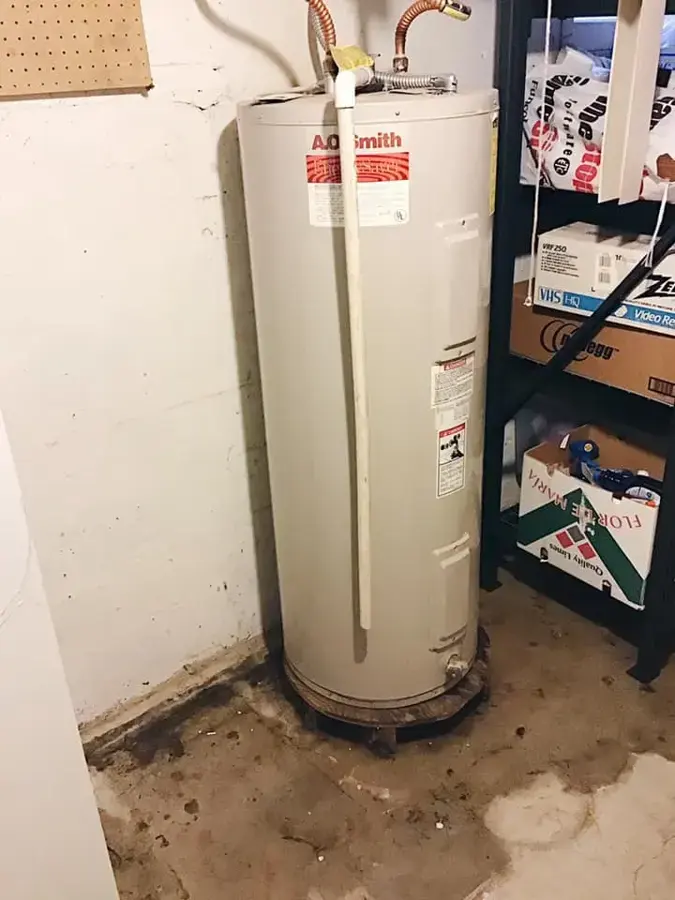
A tank water heater holds a lot of water, and when a seam or fitting gives way, that water goes wherever the floor slopes. In a garage it spreads across the concrete. In a hall closet it runs under drywall and into carpet. Either way, two separate jobs follow: getting the water out and getting a new tank in.
Key takeaways
- A leaking tank is replaced, not patched, and the water it released is a separate cleanup job.
- The City of Chula Vista utility permit page lists plumbing water heater and water piping work among work that needs a permit.
- Close the cold water supply to the tank first, then turn off the gas or the power to it.
- Water from a clean supply is usually dried in place, but wet carpet pad, drywall bottoms and cabinet bases are checked with a moisture meter.
- The same tank failure behaves differently in a garage, a closet and an upper floor utility room.
What a failing tank does to a room
Tanks are made of steel with an inner lining. Over time that lining can wear, a weld can turn porous or a fitting can start to weep, and a slow drip becomes a stream.
Water follows the easiest path. A garage floor lets it spread out in a thin sheet, while a closet sends it under walls and into the next room.
A tank in an attic or on an upper floor sends water through the ceiling below. That ceiling then becomes a ceiling leak problem too, with drywall opened and the joist bays dried.
- Rust streaks near the base of the tank point to water seeping from inside.
- A relief valve that drips often signals a tank near the end of its life.
- A puddle that returns after being wiped away means the leak is active.
- Sounds of rumbling or popping during heating can point to sediment inside the tank.
Stopping the leak safely
The first step is to close the cold water supply valve on top of the tank. That stops new water from entering, even if the tank keeps draining.
Next, turn off the power for an electric heater at the breaker, or set a gas heater to its off position and close the gas valve. Water and an active heating element are a poor combination.
- Do not stand in water if the heater is electric and the power is still on.
- Take photos of the tank, the puddle and any damaged items before moving things.
- Open the drain valve on the tank only if a hose can carry the water outside or to a floor drain.
Where Chula Vista homes differ
West Chula Vista, the original city, lies west of Hilltop Drive and north of L Street. East of Interstate 805 and State Route 125, planned communities such as Eastlake, Otay Ranch and Rancho del Rey began developing in the late 1980s and later.
No local data is claimed here about which neighborhoods have which tank locations. A tank in a garage, a closet, an attic or a utility room each sends water in a different direction, so the extraction crew checks the location first.
Two water providers serve Chula Vista: Sweetwater Authority and Otay Water District. Otay Water District also provides recycled water and sewer service to eastern Chula Vista, so which provider owns the meter depends on the address.
What the City's permit page says
The City's utility permit page lists plumbing water heater and water piping work among work that needs a permit. A replacement tank is therefore not just a purchase; it is a permitted job, and the installer should handle that step.
The cleanup and the replacement do not wait on each other in every case. The extraction crew can remove water and begin drying while the replacement is scheduled, as long as the area around the old tank is safe to work in.
- Ask the installer whether the permit has been pulled before the old tank comes out.
- Keep the receipt and the permit paperwork with the records of the loss.
- Tell the restoration crew when the plumber is coming, since walls and cabinets may need to stay open until the work is done.
How the extraction and drying crew works
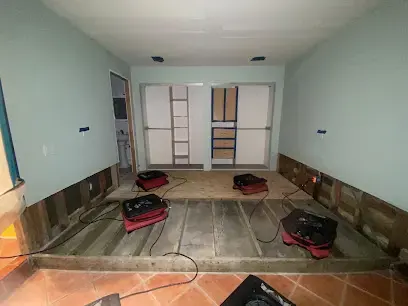
Water extraction comes first. Standing water is pulled from the floor, and wet carpet and pad are checked to see whether they can be saved.
After extraction, the team opens or removes only what the readings call for.
Cabinets, stored contents and drywall bottoms around the tank are the usual items to check. Contents on the floor are moved to a dry space, and cardboard that has wicked water is discarded.
Garage and utility room
On a concrete floor, water often stays on the surface and can be extracted quickly. The crew checks the bottom of the drywall, wall plates and any stored boxes.
Closet and interior rooms
Water from a closet tank wicks into drywall, baseboards and flooring in the next room. The crew pulls baseboards, takes moisture readings on the wall bottoms and uses air movers and an LGR dehumidifier where the walls hold moisture.
Owners, renters and shared walls
About 59.8 percent of Chula Vista housing units are owner occupied, per Census figures for 2020 to 2024. That means both owners and tenants deal with tank leaks, and in condos and apartments a leak can reach a neighboring unit.
In a rental, the first call usually goes to the property manager, and the photos taken before anything is moved help every party that follows. Coverage depends on the policy, so the paperwork is kept in one place.
In a condo or apartment, the tank may sit in a closet inside the unit or in a shared utility space. The property manager or the association is told right away, because water can reach the unit below.
Checks that catch a failing tank sooner
A water heater rarely fails without hints. A quick look every few months can reveal a problem while it is still small.
- Look at the base of the tank and the connections for rust or damp spots.
- Touch the floor around the heater to check for cool or soft areas.
- Check that the relief valve discharge pipe is not dripping.
- Know where the cold water shutoff is and that the valve turns.
Questions
Does a water heater replacement in Chula Vista need a permit?
The City's utility permit page lists plumbing water heater and water piping work among work that needs a permit, so the installer should confirm that the permit is in place.
Should the water be cleaned up before the new tank goes in?
Extraction and drying can start as soon as the leak is stopped. The two jobs often overlap, and the crew will tell the plumber if walls or cabinets need to stay open.
Which water provider serves Chula Vista?
Two providers serve the city: Sweetwater Authority serves the western and central parts, and Otay Water District serves eastern Chula Vista. The meter and shutoff belong to whichever provider serves the address.
Can a leaking tank be repaired?
A tank that leaks through its body is replaced, not patched. A leaking fitting or relief valve may be repaired by a plumber, but the cleanup of the water is a separate job.
Where can more detail on cleanup be found?
The pages on water heater leak cleanup in Chula Vista and water extraction cover the process, and the Chula Vista water damage pros page lists related services.